Friday, 14 October 2016

NDM: BBC stars under investigation

More than 100 BBC stars face tax investigations by the HRMC

http://www.independent.co.uk/news/media/tv-radio/bbc-presenters-hmrc-tax-investigation-self-employment-a7351341.html 

This article discusses the presenters who avoided paying tax from over a decade ago until now. From 2006 to 2013 some presenters incorrectly defined themselves as 'self employed'.  The BBC announced 85 of its star were moved onto staff contracts so there is no suggestion that any of them deliberately avoided paying tax or anything illegal.

  • The corporation had paid more than 120 stars in excess of £150,000
  • 131 staff were going to be given staff contracts 
  • The HRMC investigation came tom light following the ruling on a tax tribunal
I believe we need to ensure we expose people trying to break the law especially in high end jobs like this. The BBC are suppose to be for the people but this has seriously contradicted this belief and the traditions of the institution. Also, we need highly skilled journalists to investigate and collaborate their findings with other journalists to make a solid report exposes the tax evaders. 

NDM: Netflix paying less than £400,000 in corporation tax

Netflix paid less than £400,000 in UK corporation tax last year


This article portrays Netflix as a huge help in the UK economy. It has allowed audiences to stay entertained as they watch the latest series and films. Netflix revealed it made £36.5m revenue in the UK which suggests their authority in their market and that they may have got these outstanding numbers legitimately. The article also says there are no suggestions that Netflix that the business has broken the law because investigations were held. In the UK it is paying corporation taxes and VAT - spokesman for Netflix UK. Furthermore, the UK is believed to be the biggest market for Netflix outside of the US. 

  • Total of £2.5m spent on wages salaries social security and other pension costs
  • Each employee received an average of £193,000
  • Only 13 people employed for Netflix in the UK
I believe the numbers for Netflix will continue to grow as they are able to upload the latest series that people (globally) are addicted to. Profits will rise even more if there is more of a crackdown on the number of illegal websites that are current which allow people to stream the same shows and movies for free. Therefore, I believe the main competitors for the business would be these websites.

Sunday, 9 October 2016

NDM: Overuse of phone

We need to put down our cameras and smartphones - and enjoy the moment


This article discusses the convenience the internet supplies it's audiences. It allows us to connect with friends and family in different countries and share views and values globally. However, people misuse its potential and use smartphones as our eyes and our brains. In a sense, it would capture the moment and then it would replay the moment but for anyone to experience.

  • Google Glass is a hands free gadget that act as glasses which has a camera installed which allows the user to capture a particular moment and record it at the same time
  • Record precious moments
I believe people forget to embrace special moments in their lives because they are too busy trying to record it to show it off through social media. This isn't a major problem because it doesn't really directly impact people's lives but it shows the influence digital media has on people and the question is, how much will people will be relying on digital media to live our lives in the future? 


NDM: Selfies

Taking the self out of selfies - most pictures not about vanity


This article discusses the purpose of 'selfie' in society and whether people take them to glamourise lifestyles. Studies say that they are more a form of vanity and 90% are taken without the intent for self promotion which would challenge some people's views of the people on social media because the typical stereotype would be that selfies are used to show off our lives. 

  • Researchers randomly selected selfies over a 10 day period and only one in 10 were taken to communicate physical attractiveness
  • 35% was the autobiography which documented people's lives 
  • Broken down in many different categories
I believe the findings can relate back to people of older ages who take pictures for friends and family. However, for a younger audience I believe selfies are taken for vanity purposes as they want to show off their selves and lifestyles as a way of boasting. There are many factors that can influence people's finding and opinions on this topic like the social networking site, the demographic. 


Build The Wall Analysis


The article discusses how newspapers are becoming a less favourable source of getting the news and how the internet has taken over. This is a major problem for journalist as they lose their jobs and the nations all over the World won't get good quality stories like the article that brought down President Nixon to defeat corruption on some level. Also, young people aren't really paying much attention to newspapers with people from 15 to 24 are spending 30% less time reading the newspaper once they started using the web. 

1. I do believe it is a 'cause for concern' because institutions aren't able to make profits through publishing news online leading to journalists getting less pay. This is because of the fact that news online is free and barely any of the news websites have a paywall. Therefore, the quality of news would reduce because journalist wouldn't be pleased with low pay or low skilled journalists being recruited to lower costs. However, we shouldn't panic as we may be able to receive news stories that are true and fully explained. For example, technology has given people the power to record any criminal behaviour so this can be sent to news institutions who have publish it online for everyone to see in any country. 

2. Most of the predictions are true and it may not have been too difficult to come up with those assumptions. From the Ofcom research it is evident that young people are becoming reliant on the internet to get news and rarely/don't use newspaper (59% internet vs 21% newspaper). This just shows the significance the internet has on most audiences as it was a tradition to read newspapers with breakfast in the morning and now the internet has stopped that. 


3. Journalism is at risk for sure. The fact that the internet is now where news is being read, profits aren't being made. This is because its free so the employees working on these stories won't get that much pay because the business is receiving low inflows. The Scott Trust Limited funds The Guardian.  


http://www.cjr.org/feature/build_the_wall_1.php?page=all

Section 1:

Audiences need to expect to pay a fee for online news eventually so news institutions are able to benefit (make profits) 

Section 2:

The implementation of subscriptions to gain access to news stories online  will be difficult due to the way institutions abused its use by giving people information for free

Section 3:

Emergence of the internet; deterioration of newspapers

Section 4:

Three possible ways of news institutions could build a paywall to help revive the industry 

Overall

David Simon's argument is about the impact new and digital media has influenced audience's perspective of traditional methods of obtaining news. The main method would be the newspaper which is decline and has been for years now because people are using more convenient ways of getting news which can be from television, radio or the internet. It is obvious that the internet is a dominant force overall in society and it the news industry specifically because its free and can be accessed whenever, wherever. This is why people have become so reliant on it.  Therefore, David Simon proposes news institutions should begin to charge people for using the news with a paywall. So this could be a subscription fee which lasts every month or year which would allow the business to receive profits but most importantly would make audiences revisit the website/app because they probably would only sign up with a maximum of two or three news institutions. He says The Baltimore Sun believed young readers would use the free site to find news they are interested in and buy a newspaper and settle down. However, this seriously backfired as these young people were content with reading news online and not revisiting a newspaper for a full story. This is just an example of where the downfall began for the newspaper industry as more and more people were finding the substitute for them.

AC Grayling's article discusses how the evolution of new and digital media is becoming a threat to people in power. One of those would be journalists who are able to publish news stories online for free on the institution's website which other ordinary people are able to share their reviews and become critics. This has had an impact positively and negatively on the news industry as a whole depending on where you stand because it means that journalists would have to be more truthful which means preferred readers may not be pleased with what they read. Also, bloggers work in the same way so would be able to criticise the journalists and possibly challenge ideologies and beliefs of others. The media doesn't have as much of an impact politically in the US compared to Britain and the other European countries. Despite the size, local newspapers are distributed regionally.

In my opinion the only way for newspapers to have any recognition would be for institutions to charge audiences a  fee for using online content. This means that journalists would only publish news stories online instead of on paper which is ideal at this time as everything evolves around the internet. Therefore, it would still be convenient for audiences to access news as its on their device and institutions would now be able to make profits from the implementation of the pay wall. On paper it seems like a win - win situation but in reality I believe this could be the beginning of the demise of the news for some people. This is because most people are too familiar with news online being free which means they may shy away from idea of paying for online news. Furthermore, we may become more reliant on bloggers and citizen journalism to get news which means we wouldn't know the difference between what is true or false.  


Thursday, 29 September 2016

BlackBerry coming to an end


End of an era BlackBerry finally stops making phones

The BlackBerry Classic.


Its official, BlackBerry has stopped making its iconic handsets. The phone just wasn't able to keep up with its competitors in Apple and Samsung; the business is now focused on more profitable software. Chief executive has decided to help with producing software because he has worked with software in advanced work before. The business is considering entering new markets like Indonesia, South Africa and Nigeria.

I believe this would be ideal for the business as they would still be in existence in other markets and they can still make profits. The decision to change market could be the right one as there aren't as many competitors in those developing countries compared to developed ones.


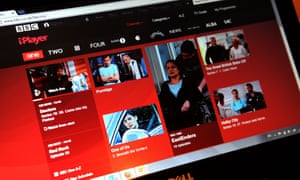
BBC iPlayer password

BBC denies iPlayer password plans are part of licence fee crackdown

 Viewers now have to confirm they have a TV licence before they can catch up on shows on BBC iPlayer.


This article comes after the announcement from the BBC becoming strict on the who is able to view the content on the iPlayer. The institution tells us the involvement of the password isn't linked to TV licence fee evaders and its for a 'more personal BBC for everyone'. This new rule will be introduced early 2017. 

  • Director of BBC 'its about giving you a better BBC'
  • BBC still will try to detect people using iPlayer without a licence, just not with the password system 

I believe that the BBC have implemented this system to ensure people without a licence won't be able to use the service. This seems obvious to me because their reasons for introducing the password seems odd and it has conveniently been added near the time of the 'packet sniffing'.