Friday, 4 November 2016

NDM: Cross media ownership


Cross media ownership: Xenophon bloc likely to support scrapping diversity rules

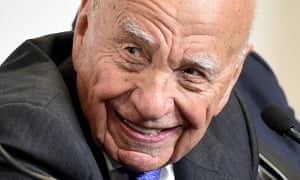
Rupert Murdoch

This article discusses the Turnbull Government (Australia) view on the ownership of media. They want media moguls such as Rupert Murdoch and Kerry Stokes to own television, radio and newspaper assets in the same market. NXT senator Stirling Griff who has carriage of the issue for the Xenophon party (Nicholas Xenophon is an Australian senator for South Australisa - team NXT), tolf Guardian Australia he was personally supportive of the Government's proposal. The Government is proposing to dump the media regulations known as the 75% reach rule and the two out of three rule. Reach Rule: prevents nine entertainment, seven west media and ten network from owning their regional affiliates. The Two out of Three rule: restricts cross media ownership, preventing moguls from controlling a free to air TV station, newspapers and radio stations in the same market.  They hope that media reform will be back squarely on the political agenda when federal parliament resumes next week (Turnbull and others). 

  • Griff says 'the real power now is with the web, with social media, with Facebook and Google. I think we have great diversity'.
  • Government proposing to dump media regulations 
  • Labour supportive of scrapping the reach rule 
From what I understand the Australian Government want people with power with media institutions to control the media as a whole in the country. This may not be such a bad move because these owners have control of most institutions in the industry. 


Sunday, 30 October 2016

The decline in newspapers: MM case studies

The New Day

1. What was the New Day trying to achieve?

The New Day wanted to create diversification in the newspaper industry. This means that they wanted to fill a gap in the market with a new/unique type of newspaper which audiences haven't viewed before. They were trying to attract audiences by constructing a newspaper more relevant to modern lifestyles rather than political 'boring' stories that would turn this creative generation of people away from newspapers. Also, they weren't aiming to steal audiences from other newspapers because they were trying to be unique and the way they did this was by forming the newspaper for modern families.

2. List the key statistics on the first page: how many people buy newspapers in the UK? How has this declined in the last year?

  • Newspapers have been in decline for over 2 years with a loss of 1 million readers
  • Newspaper for new market
  • First newspaper to cater for modern lifestyles 
  • About 6 million people buy a newspaper in Britain every day
  • Target audience: 35 - 55 age, for modern approach, opinions and comments but no political line
3. What audience were the New Day trying to attract?

The New Day newspaper were trying to attract both male and females so this would be a 50-50 split. Also, 35-55 year old people who were interested in modern lifestyles. In addition, in the article it says they were trying to speak to 'modern families in the language they use and with the positivity about what they feel in their lives'.

4. Why do you think the New Day failed so spectacularly? There are several possible reasons listed in the article but do develop your own opinion here as well.

From reading the beginning of the article alone, I felt the New Day newspaper was more like a magazine. When considering the features of it: the pictures, the 'modern lifestyles' I instantly thought of a magazine because newspaper are known for having articles with words and words trying to create moral panics and reinforcing ideologies. However, this 'newspaper' has taken a completely different approach to others and some could argue that it isn't even a newspaper.


The Guardian

1. List the key statistics on page 10: How many unique digital browsers used the Guardian website in June 2016? What are The Guardian's latest print sales figures? How does this compare to the Telegraph? In terms of finances, how much did the Guardian lose in 2015? 

  • Sales of newspapers have been in steady decline since the explosive growth of the internet in the 1990s
  • The Guardian's website is the third most read in the World with over 120 million monthly browsers 
  • But struggling to maintain print audience
  • Guardian has nearly 9 million average daily browsers, putting it a long way behind the market leader MailOnline with 14 million
2. What has been The Guardian's strategy for reversing this decline?


The Guardian had decided to set cutbacks of over 20%.They also are relying on investments to keep the newspapers alive - from Scott Trust.

3. What global event did The Guardian's digital coverage win awards for?

Pray for Paris. The terrorists attacks that had taken place in France were the reason that The Guardian won an award for digital coverage. It was significant because it gave people an understanding of the situation the city was in, the people involved both victims and perpetrators.

4.  In your opinion, will the global website strategy be enough to save The Guardian?

I don't believe this alone will save The Guardian because it is a long term strategy. This means that the benefits the institution would receive would come too late and their brand image would be under pressure at that point.


Friday, 28 October 2016

NDM: the future of journalism

1. Why does Clay Shirky argue that 'accountability journalism' is so important and what example does he give of this?

Clay Shirky argues that accountability journalism is important because of the impact it has on an audience. These journalists are those that will investigate a possible story and combine findings with other journalists to formulate a powerful article to challenge corrupt people with power. Its a classic example of iron core journalism where they are assigned to a possible development of a story and would have to begin investigating.

2.What does Shirky say about the relationship between newspapers and advertisers? Which websites does he mention as having replaced major revenue-generators for newspapers (e.g. jobs, personal ads etc.)?

Newspapers can't make as much profit through advertisement even if people were still buying newspapers. Newspaper were able to charge premium prices to businesses who wanted to advertise in their newspapers because there weren't many substitutes for advertisers to go to. This meant that newspapers could generate a healthy amount of revenue from businesses desperate to promote their products and services. IMB and AT&T.

3. Shirky talks about the 'unbundling of content'. This means people are reading newspapers in a different way. How does he suggest audiences are consuming news stories in the digital age?

People in the past would be only be able to read what institutions has printed on their newspapers so wouldn't have much of a choice on what they want to view. This may be seen as a disadvantage now because of the way digital media works but it meant that people's knowledge on a variety of topics would better as they have limited choices on what to read. Shirky gives an example of digital media being able to recommend stories or activities similar to the ones readers view so a website would allow a user to do another crossword once they finished the first.

4. Shirky also talks about the power of shareable media. How does he suggest the child abuse scandal with the Catholic Church may have been different if the internet had been widespread in 1992?

The case revealed the abuse in the Catholic Church and people were horrified by the situation but it eventually died down and people forgot about it. Shirky believes that the web wouldn't have had the reaction from the Geoghan case in 1992 but many good effects in limiting the Catholic Church's ability to continue doing this were a result of the public reuse of the documents in ways that were simply not possible in 1992 and had become not just available but trivial by 2000. By 2002 sharing of media content would allow people forward news stories again to whoever they want. This would allow most people to be informed on World affairs.

5. Why does Shirky argue against paywalls? 

He says the fact that audiences have the power to publish news themselves through citizen journalism or blogs would impact the introduction of a paywall. It would mean that more people will be content with only viewing some of a story especially if it is a preferred reading. Shirky believes that citizen journalism shouldn't be banned because it helps the World come to justice where these professional journalists wouldn't be able to help.

6. What is a 'social good'? In what way is journalism a 'social good'?

A social good in this context would be a service, which would be newspapers, that helps society by informing them on news. Journalism is a social good because it provides society with the news that is/could be relevant to them in articles which can be accessed through newspapers or online. This means that they want the people of countries to have knowledge on current affairs so they can feel connected and form opinions political, social, economical etc views.

7. Shirky says newspapers are in terminal decline. How does he suggest we can replace the important role in society newspapers play? What is the short-term danger to this solution that he describes?

Accountability journalism is the only way people will stay engaged with newspapers. This is because these journalists would carry out investigations which could expose people in power doing illegal actions. It provides people with good quality news that people really want to hear instead of short immediate news stories.

8. Look at the first question and answer regarding institutional power. Give us your own opinion: how important is it that major media brands such as the New York Times or the Guardian continue to stay in business and provide news?

Accountability journalism is needed for society as these journalists are no other and want to provide us with the most impacting news stories. They can expose corrupt people and systems like they have in past because of the thorough investigation they hold. This is where journalism is a social good and not ordinary journalism which reports pointless and irrelevant news at constant rates. I believe New York Times and The Guardian are significant institutions as they will develop the skills of accountability journalism and could potentially reinforce/promote it. If readers see a story from one of these institutions, they would be more likely to believe it. Especially because of the possible increase in the number of good quality stories being published.


Thursday, 20 October 2016

NDM: Spotify UK revenues

Spotify UK revenues surge to almost £190m as mobile subscriptions take off


Spotify UK revenues surge to almost £200m as mobile subscriptions take-off

The article shows how the music app, Spotify, is booming in its market. This is through the subscriptions people are signed up to which can be accessed on a variety of devices like smartphones, tablets, consoles etc. It is the World's biggest music streaming service at the vakue of £6.9bn and its revenue in the UK has risen by 18% last year (from £159m to £187.2m). This was fuelled by a 44% surge in subscription revenues from £119m to £171m. In addition, the company believes this increase is due to people using mobile phones to stream music rather than computers and 2015 was there best year. 

  • 44% surge in subscriptions
  • Subscription income accounts for over 90% of Spotify UK's total revenue
  • Last year ad revenue fell from £11m to £10.8m
  • 30 million songs on offer and charges £9.99 a month fir premium subscriptions
I believe Spotify is having a huge impact and making serious revenue because it is an app which allows people to play the music they like. It is a good replacement for CD's because a digital copy of a song means it can't get damaged, stolen, lost and has to be bought at a shop. Music from Spotfiy can instantly be used without many problems. 

NDM: Lack of journalism


I'm with you on the digital revolution, its the lack of journalism I can't face


Giving Twitter the bird: columnist argues that its users don’t gather news.

This article discusses the significance free news has on the newspaper industry. A local newspaper in in the US state of New Hampshire had come to an end after 90 years. Citizens has to pay for the paper which wasn't an ideal strategy in this generation as people expect news to be relevant, instant and most of all free. Charlie Arlinghaus believes people don't get their news from Twitter and these people misunderstand their sources. He says 'someone he/she follows on Twitter or other social media posts links to stories they click on'.

  •  Ways of obtaining news has changed 
  • Charlie Arlinghaus doesn't believe social media is the main source of news
  • He also believes people aren't sure on where the news they find really comes from 
  • News stories aren't as in detail as they used to be
I believe the fact that some people make the mistake of saying they rely on social media for news would make it difficult to find a concrete observation if a test was carried out. For example, if someone was to hold a survey asking people where they obtain their news the findings may be inaccurate because of the simple mistake people are making. Therefore, society would believe that journalists aren't that useful because they are reliant of social media - not true - and the quality of news would then reduce as the good journalists may decide to change their occupation.  

Sunday, 16 October 2016

Newspapers: the effect of online technology

Do you agree with James Murdoch that the BBC should not be allowed to provide free news online? Why?
1. I don't believe that audiences should pay for online news from the BBC to an extent. This is because the public already pay the TV licence and it would seem different/odd or might cause an upset if they have to pay an additional cost for content from the BBC. The BBC is an institution that is for the people so it would not be good for their reputation if they decided to charge for online content because the people will feel betrayed. They could possibly do it in the future once another institution decides to charge for online news but I don't believe they should be the first to try it. This is because paying for online content will be the norm in the future and both left and right wings would want to see the news on the BBC.

Was Rupert Murdoch right to put his news content (The Times, The Sunday Times) behind a paywall?
2. In March 2013 The Times had a large number of people subscribed to its website. There is an obvious increase in the amount of people subscribing from 2010 to 2013 where in the beginning there weren't any subscriptions. It only began in 2011 and gradually rose. This would suggest that Rupert Murdoch's decision was beneficial as more people were willing to pay a fee to access The Times news online. However, this wasn't the case and the main problem probably arouse from audiences were deciding to buy from competitors like any other news institution that provides free online news. For example MailOnline makes a small profit from advertising funding which would leas to £45 million a years. Whereas The Times lost £27.8 million for the year and the institute had to try to keep costs down and made people redundant.

Choose two comments from below the Times paywall article - one that argues in favour of the paywall and one that argues against. Copy a quote from each and explain which YOU agree with and why.
3.
In any business, success depends on delivering one of three things to customers: lowest cost, differential quality, or a niche unavailable elsewhere. Newsprint is no exception, but the lowest cost product in the marketplace is set at zero. The Times isn't niche, that's the like of aviation monthly, so it has to deliver a product of sufficient quality for readers to be willing to pay the premium. Is it doing this? I would say not really, more work is needed, and it's hard to see how the quality can improve with costs being cut.
I agree with this comment as The Times is no different to its competitors like I have mentioned and so audiences would opt to visiting MailOnline because it is free. This is something The Times does not provide and Rupert Murdoch has put the institution in a dilemma as they have given the MailOnline a competitive advantage. Furthermore, it is evident that audiences don't want to pay premium prices for a product where the quality hasn't been improved.

I'd put my money on The Times when it comes to UK-based newspapers. The Times, more than any other paper, is more ready for a printless future, should it arise, as they just need to migrate users, in relatively low numbers. to the digital subscription. And it is having an almighty practice run to get it right. It doesn't need to create the vast volumes of (crap) content that the Mail does and it has a very strong brand argument to ad buyers.

I disagree with this comment partially because I believe the fact that newspaper articles are now online for anyone to read, audiences would change for the newspaper themselves. This means that overall the print industry may begin to cater for different audiences making the print platform very similar to the e-media one. Therefore, most newspapers will have similar news articles and perhaps share them in a more fair perspective showing both parties views in a story. Also, this could be the reason why businesses wouldn't be overly worried about who promotes their good or services because viewing numbers would be pretty similar.


Why do you think the Evening Standard has bucked the trend and increased circulation and profit in the last two years?
4. The Evening Standard increased the number of copies they were distributing. The figures changed from 700,000 copies a day closer to 900,000 which could suggest the 27% increase in circulation. When compared to other regions, the change is far more significant and is the only one which has increased whereas Manchester Evening News or Birmingham Mail decreased in circulation. The increase in the number of copies would probably infer that newspapers have changed something to their newspapers incentivising them to buy them.

Is there any hope for the newspaper industry or will it eventually die out? Provide a detailed response to this question explaining and justifying your opinion.
5. I don't believe newspapers will completely die out because it could play a part of society. Newspaper will probably become a niche product in the future where only a segment of sophisticated people will be targeted by news institutions. This would improve the image of newspapers as people may want to buy one to be associated with the possible stereotypes of reading newspapers instead of online news.