Friday, 3 March 2017

Identities: applying feminism

1) What are the five types of feminism outlined on the first page of the Factsheet? 

  • Radical feminism 
  • Liberal feminism 
  • Marxist-feminism
  • Black feminism 
  • Post modern feminism


2) Which category would Judith Butler fit into? What about Angela McRobbie? Laura Bates and Everyday Sexism? Explain your answers.

Judith Butler - believes tradition feminists are WRONG to divide society into 'men' and 'women' and says gender is not biologically (Liberal feminist)

Angela McRobbie - highlights the empowering nature of magazines such as cosmopolitan and glamour, taking a different perspective to traditional feminist like radical (post modern feminism)

Laura Bates - she discusses the issues of feminism with the consideration of experiences of females who have been discriminated because of her gender (post modern feminism)


3) What was the difference between suffragists and suffragettes? Which approach do you agree with?


Suffragists (liberal feminist) - these were feminists from the 1897 and they protested peacefully, moderately and lawfully. Suffragettes (radical feminists) - these were feminists who didn't believe the NUWSS were progressing quick enough and decided to use aggressive antiques to persuade society women need equal rights.

4) What was Laura Mulvey's argument regarding Hollywood film? Do you agree with it? Why?


In 1975 Laura Mulvey argued that cinematography of Hollywood films objectifies women; the camera 'looks' at women as if were a male and the woman is a desirable sexual object. This is called the male gaze.I do believe Hollywood movies present women in this way by having her act as the 'princess' that needs to be saved by the 'hero'. She would then somehow end up in the arms of the hero who is the main character and it could be interpreted at this point of the film that she is the main character's trophy (objectification).

5) Watch this YouTube video extract on Jean Kilbourne's Killing Us Softly series and list five examples she gives of the media objectifying women:


  • Correlation between weight and marriage 
  • 'Keep her where she belongs'
  • Photos of models half naked
  • Adverts of women linking to appearance 
  • L'oreal advert


6) What is Killbourne's argument regarding the representation of women in advertising?

She believes women feel as if they must strive for perfection like the models in adverts otherwise they feel guilty and ashamed when they cannot achieve the absolute flawlessness they are being told is 'normal'.

7) What is Naomi Wolf's argument in The Beauty Myth?

Wolf claims that the notion of 'beauty' is entirely socially constructed and patriarchal. This means that men in a given society create rules of what is considered beautiful in women but this alters from culture to culture.

8) Why is the representation of women in music videos a controversial topic for feminists?

In the music genre of R&B and hip hop videos has been an area of contentious debate for feminists in recent years. Many feminists have looked at the lyrics and images used in these musical genres and there has been disagreement about whether the women portrayed are victims of patriarchal oppression or empowered female role models.


9) What is your view of female artists such as Nicki Minaj or Beyonce - do they empower women or reinforce sexist, patriarchal views?

Both of these artists reinforce sexist and patriarchal views because of the content they produce and portray. Their main theme in most of their music videos are about sex and seduction which would influence male audience's into objectifying women and females (usually young) who aspire the artists may copy their behaviours. So its both males and females that are effecting the progression of femininity because of the significant public figures in the music industry that can influence audiences. Also, audiences would probably associate Nicki Minaj's music and behaviour with Laura Mulvey's theory of the male gaze because males are forced to glare at her because of the way she is presented.


10) Has new and digital media given women an opportunity to challenge sexist views or is it simply another media platform for women to be oppressed? Explain your view.

New and digital media has already given women a voice to challenge sexist views. A movement like 'No More Page 3' has had a significant on society and the rights of women because they have put a stop to certain things. For example, they stopped The Sun from putting a young naked model on page 3 of The Sun through a movement that's headquarters is online. Furthermore, it has given more women the confidence to speak about their sexist experiences in society which could close the 'gap' between males and females. However due to public figures being every like a God, audiences are always at the risk of getting influenced by them. For example, young males from working class families would most likely be fans of hip hop and could copy the themes presented in the music videos. Therefore, would be prone to discriminating and objectifying women. 


Thursday, 2 March 2017

Identities and the media: feminism

1. What are the two texts the article focuses on?

It focuses on post feminist world which isn't a movement but is better described as the current set of assumptions in contemporary society and culture.


2. What examples are provided from the two texts of the 'male gaze' (Mulvey)?
culture

The theory can be applied to suggest that male audiences are still viewing women for pleasure reinforcing the 'male gaze' theory Mulvey has created. This is through the media text from Beyonce which is displayed as being seductive in her music video.


4) Do texts such as these show there is no longer a need for feminism or are they simply sexism in a different form?

These types of texts reinforce the need for feminism as female characters on screen are displayed ad being seductive and trying to be pleasurable for the male audience. So we aren't in a post feminism society where feminism isn't needed as its media texts like the one from the music video that are influencing males to objectify women.

5) Choose three words/phrases from the glossary of the article and write their definitions on your blog.

Third wave feminism - was a movement that redefined and encouraged women to be dominant and sexually assertive.
Patriarchy - an ideology that places men in a dominant position over women
Nostalgia - a sentimental longing for the past, often only remembering the positives of the time.


No More Page 3

1) Research the No More Page 3 campaign. Who started it and why?
It was started om the 23rd of January 2015, after two and half years of campaigning by No more page 3, the sun newspaper had stopped the feature showing pictures of topless women on its 3rd page.

The No More Page 3 campaign was started by Lucy-Anne Holmes who is an actress and author. She did this to prevent the issue of women being objectified in society and she did face problems from people along the way.

2) What reasons did the campaign give for why Page 3 had to go?

Its the most obvious reason which is the objectification of women. I do not agree with objectifying any person and page 3 did this by getting young models to get naked in front of a camera for the nation to see. Also, younger audiences reading/browsing The Sun newspaper would be exposed to soft pornography and this could lead to other issues like these same males becoming criminals through rape for example.

3) Read this debate in the Guardian regarding whether the campaign should be dropped. What are Barbara Ellen and Susan Boniface's contrasting opinions in the debate?

Barbara Ellen does agree with the campaign and women should stop getting exploited by the opportunity for fame. Whereas Susan Boniface doesn't agree with the campaign as she believes page 3 is actually empowering women.


4) The main campaign website has now been replaced by a site calledSexist News, designed to highlight sexism in the media. Give an example of a recent story the website has highlighted. Do you agree with the view of the website?

The article discusses the problems females face when deciding how to appear in certain situations and in the show they were presented with revealing clothes which many young audiences would expect to see. It has now been installed in the beliefs of young people that females should always dress to impress (males) reinforcing the male gaze theory. 


5) How can the No More Page 3 campaign and Sexist News website be linked to the idea of post-feminism?

The No More Page 3 campaign and the article that I was reading from the Sexist News website it seems the two websites are similar and share the same views. They both believe that they shouldn't being showing too much of their own skin and should respect their bodies. This does link to the idea of post feminism because these websites would suggest feminism needs to exist because of the examples they have on their websites like the way Little Mix were dressed on X Factor - a show with millions of viewers.

6) What are your OWN views on these campaigns? Do you agree with their aims? Is there still a need for these campaigns in the media?

The campaigns are doing too much to change society in my opinion. This is because just as women dress to impress males, we see males do the same thing through the different ways they are presented on television. For example, just like a girl group from X Factor would be dressed half nakedly, a male group would do the same showing off their bodies reinforcing the female gaze and so both genders are being objectified. The campaign isn't having a fast enough impact to affect society like they want to because even without 'Page 3' there are millions of other sources where audiences can view naked women.


7) Finally, do you agree that we are in a post-feminist state or is there still a need for feminism?

Yes, we have progressed to the post feminism state because the equality of women is getting greater but there are some things males do that females can't and vice versa so we shouldn't look to change that.


Identities and Film: blog task

1. Read Media Factsheet 142: Identity and Film.

2. Complete the Twenty Statements Test yourself. This means answering the question ‘Who am I?’ 20 times with 20 different answers. What do they say about your identity? Write the 20 answers in full on your blog.

  1. I am Sharife
  2. I am a brother
  3. I am 18
  4. I am 6 foot
  5. I am a son
  6. I am a student
  7. I am a L.H fan
  8. I am a Chelsea fan
  9. I am a man
  10. I am a male
  11. I am an Oklahoma fan
  12. I am a New York Giants fan
  13. I am mixed race
  14. I am humble
  15. I am chill
  16. I am hard working
  17. I am self motivated
  18. I am not lazy
  19. I am a teenager 
  20. I am tired


3. Classify your answers into the categories listed  on the Factsheet: Social groups, ideological beliefs, interests etc.

  1. Social groups and Classifications
  2. Social groups and Classifictaions
  3. Social groups and Classifications
  4. Social groups and Classifications
  5. Social groups and Classifications
  6. Social groups and Classifications
  7. Interests
  8. Interests
  9. Social groups and Classifications
  10. Interests
  11. Interests
  12. Social groups and Classifications
  13. Social groups and Classifications
  14. Self evaluation
  15. Self evaluation
  16. Self evaluation
  17. Self evaluation
  18. Self evaluation
  19. Social Classification
  20. Self evaluation

4. Go back to your favourite film (as identified in the lesson). What does this choice of film say about your identity? Are there any identities within the film (e.g. certain characters) that particularly resonated with your values and beliefs?

Training day - this film is about corrupt police who constantly are displayed exploiting the public. This choice of film would suggest I am interested in action and violence from media texts and possibly real life. This is because of the way characters are presented in the film with the constant use of guns, violence and drugs. Denzel Washington plays the role of the corrupt police man and he is portrayed as being cold blooded. Usually I enjoy his character in films but in this film I kind of swayed towards the other cop as he was presented as hard working which I can relate with. 


5. Watch the trailers for the five films highlighted as examples of gay/lesbian representation in mainstream film. How are LGBT identities constructed in the trailers and how are audiences encouraged to respond to these representations?

Wilde:
This trailer showed a character from the past who was in discreet gay relationship. One of men said he wanted to reveal their love and wanted other people to know about it but they knew the consequence of doing this. Once it came to everyone's understanding about their situation, the men were being targeted by most (if not all) of the characters in the film and one of them was going to prison it seemed. It could be suggested that this was a way of punishing the men for their beliefs. It's fair to say society didn't agree with them being gay and it could be argued that the audience are supposed to be sympathetic for the characters as their story is being told so we could build a personal relationship with the characters (uses and gratification).

The Wedding Banquet:
This film seems jolly because of the music used and certain scenes from the trailer. Again they are trying to hide their relationship.  


Friday, 24 February 2017

Identities: feminism and new/digital media

Case study: Everyday Sexism

1) Why did Laura Bates start the Everyday Sexism project?

Laura Bates started the project to inform people that sexism is still an issue in today's society despite the progressions made in previous decades. She had real life examples of where females were discriminated, specifically by males, which made them feel as if they were the problem.

2) How does the Everyday Sexism project link to the concept of post-feminism? Is feminism still required in western societies?

The project links to the concept of post feminism because it provides evidence as of why feminism should still exist in society. This is because women are being mistreated in public and even in formal environments like in the workplace. So feminism is required to ensure that women aren't being objectified but extreme feminists need to become less radical.

3) How can you apply Judith Butler's theory of gender as a 'performance' to the creation of the Everyday Sexism project?


Judith Butler's theory can be applied because the project depicts the ways society perceive females and it is based on the appearance of them. For example, feminist would suggest that society believes a female's role in society is to look 'sexy' for males, which also links with Laura Mulvey's theory of the male gaze, so this is why people find it the norm when females are constantly judged on their appearance.

4) How does Angela McRobbie's work on female empowerment link to the Everyday Sexism project?

This links with the Everyday Sexism project because the way some females act reinforce the feminist stereotypes of society which is males objectifying women. This is because some females act in seductive and sexual ways in media texts which means males are influenced into discriminating women because their favourite hip hop and R&B artists are portrayed this way.


Media Magazine: The fourth wave?


Read the article: The Fourth Wave? Feminism in the Digital Age in MM55 (p64)

1) Summarise the questions in the first two sub-headings: What is networked feminism? Why is it a problem?


Networked feminism - feminism is often divided into 'waves' to explain the cultural context in which they began:

  • first wave - 19th to early 20th centuries, main focus on suffrage
  • Second wave - 1960s, campaigning for the growth of equal rights and leading to equal pay (70s) 
  • Third wave - late 1990s, often identified as post feminism
  • Fourth wave - tackles social inequality issues, especially through technology
Ordinary people have user generated content websites where they can share these feminist thoughts.

2) What are the four waves of feminism? Do you agree that we are in a fourth wave ‘networked feminism’? 

  • first wave - 19th to early 20th centuries, main focus on suffrage
  • Second wave - 1960s, campaigning for the growth of equal rights and leading to equal pay (70s) 
  • Third wave - late 1990s, often identified as post feminism
  • Fourth wave - tackles social inequality issues, especially through technology
In the text, it says society is trying to tackle social inequality issues found both on, and using, modern technology. Hashtags and  blogs have been created to spur on the feminist upheaval. So based on this, I believe we slightly do live in the fourth wave where inequalities are still being negatively portrayed by the media.


3) Focus on the examples in the article. Write a 100-word summary of EACH of the following: Everyday Sexism, HeForShe, FCKH8 campaign, This Girl Can.


Laura Bates started the Everyday Sexism project to inform people of the inequalities in society today and wants to ensure females rights are as secure males. She had real life examples of where females were discriminated, specifically by males, which made them feel as if they were the problem. 'He For She' which campaign is led by Emma Watson and she focuses on male support for gender equality. Its a digital campaign and generated a huge response; Watson has decided to use Twitter  (where she already has a large following) for a Q&A campaign deciphering the issue. The campaign has apparently undermined the strong woman and feminism has become more reliant on men. 


4) What is your opinion with regards to feminism and new/digital media? Do you agree with the concept of a 'fourth wave' of feminism post-2010 or are recent developments like the Everyday Sexism project merely an extension of the third wave of feminism from the 1990s?


I believe feminism of post 2010 is in the fourth wave as women are being discriminated so much so that most of the public can't see it anymore and believe its the norm. This could explain why audiences believe feminist are really repetitive as they are constantly displaying the issues with society and sexism but no one wants to listen. So feminist have now turned to digital media to gain a better audience who would be able to view their beliefs and ideologies which is much more convenient than people having to watch/listen to a speech on the television. There are examples on social media and social experiments to assess how society as a whole treats women as inferior which shows we are still working on the development of gender equality. So Emma Watson's campaign should be successful due to the use of technology which all kind of audiences use.   


Monday, 20 February 2017

1) How might this video contribute to Butler’s idea that gender roles are a ‘performance’?


The music video of Beyonce is created to portray a female trying to show off her body and her features which definitely covers the idea that the gender roles are a 'performance'. The way she acts and the clothes she wears reinforces this as shes is displayed as being revealing and wants love and affection which are elements heavily associated with women.

2) Would McRobbie view Beyonce as an empowering role model for women? Why?

This reinforces Mcrobbie's idea as a female is presented as glamorous in a media text. This is by the behaviour and clothes she wears which acts as a male gaze (Mulvey). 


3) What are your OWN views on this debate – does Beyonce empower women or reinforce the traditional ‘male gaze’ (Mulvey)?

As mentioned before, this music video reinforces the male gaze as Beyonce is trying to attract males 

Friday, 10 February 2017

NDM: Wikipedia banning unreliable news

Wikipedia bans Daily Mail as 'unreliable' source

https://www.theguardian.com/technology/2017/feb/08/wikipedia-bans-daily-mail-as-unreliable-source-for-website
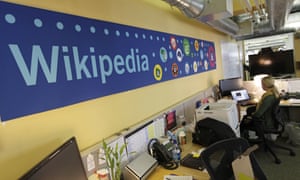
Wikimedia Foundation office in San Francisco, US.

Wikipedia editors have voted to ban the Daily Mail as a source for the website in all but exceptional circumstances after deeming the news group “generally unreliable”. The move is highly unusual for the online encyclopedia which rarely puts in place a blanket ban on publications and which still allows links to sources such as Kremlin backed news organisation Russia Today, and Fox News, both of which have raised concern among editors. 

This is an unusual change for the website because they don't care about the public changing information on the website. It seems the fake news debate is probably impacting the institution.

NDM: Facebook preventing discrimination

Facebook stops advertisers illegally discriminating by race

https://www.theguardian.com/technology/2017/feb/09/facebook-stops-advertisers-illegal-discriminating-race

Facbook logo

Social network will still allow targeting based on ethnicity affinity of users in domains other than housing, employment and credit. It also covers the discrimination of personal characteristics, race, sexual orientation and age. Enforcing the rules may be tricky, but Facebook plans to use new technology “that leverages machine learning” to identify the most egregious offenders – those that “offer housing, employment or credit opportunities” in a discriminatory manner. The move follows accusations that the social network offered tools that allow advertisers to break American anti-discrimination laws. First highlighted in March 2016, the affinity targeting was intended to allow advertisers to target messages to specific audiences without getting into the murky ground of racial profiling.